
When Is It Time to Adjust Your Goals?

“Goals aren’t just tasks; they’re trust-building exercises with yourself.” — Jeannette Seibly

The end of July has come and gone. Less than five months remain in 2025. While many of us have written down goals, just as many are contemplating ways to ignore them—if we even remember that we had any.

Too often, goals are drafted, printed, and filed—never to be seen again until shredding day.

On a network call last week, I heard something familiar—yet still striking: the quiet detour people take from their goals. Several spoke of changing or setting them aside. While this isn’t new, it prompted deeper questions: Do we abandon the effort too quickly, missing what the process of working toward a goal could unlock? Or is it simply unfeasible this year due to shifts in life or business, like caregiving responsibilities, job changes, new company mandates, or health setbacks?

A goal isn’t just an endpoint. It’s a stretch. It asks us to reach beyond habit and into growth—where inner strength, clarity, and confidence can be revealed.

No doctrine says you can’t change a goal. No rulebook says you should. The difference? It’s personal. It depends on what your commitment to shift, create, or move forward—and how urgent it feels. (Example: If a boss asks you to join a team, you comply asap; if a doctor advises weight loss and exercise, you act with urgency—or face the consequences.)

Throughout the remainder of the year, opportunities will arise to abandon, postpone, or fully commit to your goals. The question that must be answered is: Are these goals designed to satisfy my boss, client, or family? Or, are they serving my deepest intentions: financial freedom, improved health, and stronger relationships? Then, what is the cost of waiting?

Every goal requires an evolving process to be fulfilled—you won’t be able to predict every twist, relationship shift, or unexpected circumstance. Yet the goal itself often remains the gateway to growth, and the confidence that emerges along the way is invaluable.

The key? It’s up to you.

🧭 Definitions to Anchor Your Focus

Review your goals and ensure these three keys are included. If not, consider rewriting and pursuing.

  • Goal: A desired result requiring purpose and action. Keep it under 10 words and assign a timeframe. → Achieve $10,000 pay increase by 12/31/2025Lose 10 pounds walking 3x daily by 9/30/2025
  • Intention: A clear commitment fueled by personal meaning and direction. It’s the “why” behind your goal—the energy that drives it. Again, 10 words or less.
  • Milestones: Measurable checkpoints that track progress (10 words or less). These build your confidence and remind you that success is unfolding, even when it’s not immediately visible.

My advice? Keep going. Only change your goal if it no longer aligns with your life’s direction. For example, if a job offer falls through, staying in your current role might be the best choice for now—but that doesn’t mean you stop exploring new opportunities. Choosing to stay isn’t a failure; it’s a moment of clarity and focus. It may also be the perfect time to set a new goal—one that genuinely excites and inspires you.

What will you proudly say you achieved in 2025? The next five months will fly by—and before you know it, it’ll be 2026. Make sure you can look back and say, “I did that.” The most meaningful wins often come from the goals that required you to stretch. (Congrats—early!) And remember, you don’t have to do it alone. Lean on your coach, your team, and your circle of support. Trust yourself—and trust others to help you stretch.

© Jeannette Seibly 2025 All Rights Reserved

Jeannette Seibly, an award-winning Talent Advisor, Leadership Results Coach, and Business Author, has guided thousands of executives and business leaders to achieve remarkable success over the past 32 years. Her specialty is delivering innovative solutions for hiring, coaching, and leadership challenges—with excellence and accountability at the core.
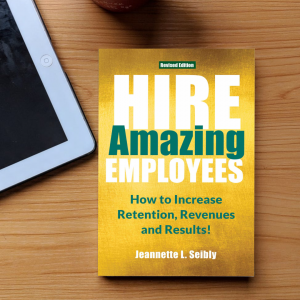
For those navigating the 55+ transition, goals aren’t just about productivity—they’re about rediscovery. This stage invites a deeper alignment between values, lifestyle, and legacy. Whether you’re refining your career path, relocating, or reimagining what fulfillment looks like, the right goal can act as a compass—guiding you toward clarity, confidence, and meaningful impact. Contact Jeannette now.

Change Management: The Biggest, Costliest Mistake Many Leaders Make

“Hiring the right person for the wrong job equals poor job fit. And no amount of training and development will make them a superstar.” — Jeannette Seibly

🔍 Due Diligence for Systems vs. People

Organizations routinely invest time and resources into vetting changes to systems, operations, technology, and financials. Yet when it comes to hiring, promoting, or transitioning employees, decisions are often made based on gut instinct, biased assumptions, or incomplete data—leading to costly missteps.

“Hiring the right person for the wrong job equals poor job fit. And no amount of training and development will make them a superstar.” — Jeannette Seibly

💥 The Cost of a Misguided Promotion

A bank promoted a young man deemed a “future leader” by upper management. What did they fail to uncover? He lacked respect from both clients and colleagues. Within six weeks, he was fired. The fallout included lost trust, team disruption, and reputational damage.

This could have been avoided by using a strategic job fit selection system and a validated assessment to objectively measure leadership potential, decision-making style, and interpersonal effectiveness.

🧠 Hire with Eyes Wide Open

Promotion and transition errors are a hidden, costly drain on performance, trust, and compliance. The uncomfortable truth? Leaders often stumble for preventable reasons:

  • Gut over data. Nearly 62% of hiring decisions are influenced by managerial bias rather than objective performance indicators (Harvard Business Review, 2023).
  • Resumes are increasingly unreliable. With 45% of job seekers using AI tools (ResumeBuilder, 2024), the résumé is often a polished illusion.
  • Performance appraisals are broken. 66% of employees say reviews are unfair, and 95% of managers are dissatisfied with the process (Gallup, 2022). People are promoted due to politics, not performance.
  • Boomerang hires rely on memory, not metrics. Approximately 35% of new hires are returning employees, yet few organizations analyze the reasons for employee exits or their readiness for current roles (Workforce Institute, 2023).
  • Assessments must meet federal standards. The EEOC and DOL require pre-employment tests to be validated, job-related, and non-discriminatory. Many are not.

💸 Fact: 82% of companies promote the wrong person into management, leading to productivity loss, morale damage, and client attrition—costs that ripple far beyond salary figures (Dove Development).

📈 Promotion: Beyond Performance

Promoting someone based solely on past performance—like a top salesperson to a manager role—often backfires. Leadership demands empathy, communication, and delegation, not just technical skill.

Without proper evaluation and coaching, these transitions frequently lead to disengagement, increased turnover, and missed revenue targets. Objective tools give leaders clarity about who’s truly ready to step up.

🔄 Job Transitioning: A Strategic Imperative

When employees relocate, shift roles, or take on new responsibilities, success hinges on job fit. Often overlooked:

  • Career pathing offers a structured roadmap aligned with organizational needs and personal aspirations
  • Personalized development (mentoring, coaching, tailored skills-building) helps talent thrive
  • Onboarding plans bridge early gaps and reinforce role clarity and cultural alignment

Together, these elements form the backbone of a strategic job fit selection system that improves role transitions and strengthens succession planning.

💸 Fact: Poor promotions and misaligned job transitions can cost organizations up to 10x the employee’s annual salary, especially in leadership roles—making clarity and fit essential to long-term success (Lucent Global, HRMorning).

🚀 Call to Action: Elevate Your Leadership with Strategic People Decisions

The alternative isn’t guesswork—it’s strategy. Smart leaders don’t gamble—they build infrastructure that earns trust and delivers results. They implement a strategic job fit selection system that ensures every promotion and talent transition is intentional, data-informed, and compliant.

That includes:

Validated job fit assessments to predict performance, leadership readiness, and interpersonal strengths

Structured, compliant hiring and promotion processes—standardized interviews and role-specific decision criteria

Manager training to reduce bias and support confident decision-making

Intentional promotion and job transition planning to build trust, reduce turnover, and align talent with long-term success

Your systems are only as strong as the people running them. Let’s make sure you’ve got the right ones in the right roles.

© Jeannette Seibly 2025 All Rights Reserved

🔗 Ready to initiate your next chapter—or refine your role as a powerful contributor? Jeannette specializes in coaching leaders who are ready to build legacies, embrace reinvention, and lead with clarity.

Jeannette Seibly, an award-winning Talent Advisor, Leadership Results Coach, and Business Author, has guided thousands of executives and business leaders to achieve remarkable success over the past 32 years. Her specialty is delivering innovative solutions for hiring, coaching, and leadership challenges—with excellence and accountability at the core.

🔗 Contact Jeannette for a confidential conversation about smart hiring, insightful promotions, and intentional transitions.

What Happens When You Make Assumptions?

“Making assumptions hurts performance, effectiveness, and profitability.” Jeannette Seibly

“You think someone ignored your email. Turns out it landed in spam.”

“You believe someone is upset with you because they didn’t return your call. Turns out they didn’t get it.”

This common occurrence can limit your effectiveness as a leader, boss, influencer, or team contributor.

⚠️ What happens when you create false narratives:

  • You limit your ability to influence.
  • You allow the assumption to lead to misunderstandings and missed chances.
  • You erode trust and connection – your boss, co-workers, and clients no longer trust in your leadership.

🔄 Why We Do It

  • Your mind fills in the blanks quickly and you believe your perceptions to be the truth.
  • You base it on past experiences, not current facts.
  • You’re driven by emotion more than logic.

💬 What Can You Do Instead

  • Follow-up and ask instead of guessing.
  • If you called, send an email. If you sent an email, call. Leave a post it reminder.
  • Ask open-ended questions to learn the truth.

Assumptions are normal—but unchecked, they cloud judgment. “Slow down. Ask. Understand. Clarity leads to better working relationships and results.”

🔗 Ready to initiate your next chapter—or refine your role as a powerful contributor? I specialize in coaching leaders who are ready to build legacies, embrace reinvention, and lead with clarity. Let’s talk about what’s next for you.

👉 Contact me for a confidential conversation.

©Jeannette Seibly 2025 All Rights Reserved

Jeannette Seibly, an award-winning Talent Advisor, Leadership Results Coach, and Business Author, specializes in delivering innovative solutions for hiring, coaching, and leadership challenges. Over the past 32 years, she has empowered business owners, bosses, and leaders to achieve remarkable success. With a steadfast commitment to excellence, Jeannette champions those eager to elevate, expand, and excel in their results.

🧭 How to Reduce the High Cost of a Poorly Designed Job Fit Selection System

“Poor fit isn’t just inconvenient—it’s disruptive to morale, momentum, and mission.” Jeannette Seibly

Hiring isn’t just about filling a role—it’s about shaping the future of your organization. When leaders rely on outdated or misaligned selection systems, they invite costly consequences that echo across departments, customer relationships, and organizational culture. A poor fit isn’t just inconvenient—it’s disruptive to morale, momentum, and mission.

When organizations rely on flawed selection processes, the ripple effects extend far beyond hiring missteps:

  • 🚫 Overlooked Talent: Qualified candidates are often missed due to vague criteria or unconscious bias.
  • 📉 Lost Loyalty: Customers leave when service suffers from underqualified or mismatched employees.
  • 💸 Financial & Legal Risk: Frequent hiring and firing cycles damage reputation, increase turnover costs, and heighten liability concerns.
  • 🧠 Bias-Driven Choices: Selection decisions reflect unresolved beliefs and emotional residue, not data-driven clarity.

💡 How to Improve Hiring Precision and Integrity

To build a hiring process that honors both excellence and equity:

  • 🎯 Clarify the Role: Develop clear job specifications and descriptions to define success on the job—not just tasks, but traits and mindset.
  • 🛠️ Use Validated Tools: Employ legally compliant, scientifically sound assessments and structured interviews for hiring, promotions, and transitions.
  • 🔍 Treat Intuition as a Signal, Not the Verdict: Gut instincts offer clues, but they can’t answer who, what, where, when, or why. Let data and dialogue do the heavy lifting.
  • 📅 Prioritize Onboarding: Even returning employees (Boomerangs) need a fresh launch. A 180-Day Plan ensures integration, accountability, and cultural alignment. (See Hire Amazing Employees, Chapter 6 for practical tools.)

🧩 In Summary

A well-designed job fit system is a leadership imperative. When we align roles, tools, and onboarding strategies with clear standards and inclusive practices, we create space for true potential to emerge. The payoff? Stronger teams, greater customer trust, and a workplace built on confidence—not guesswork.

©Jeannette Seibly 2025 All Rights Reserved

Jeannette Seibly, an award-winning Talent Advisor, Leadership Results Coach, and Business Author, specializes in delivering innovative solutions for hiring, coaching, and leadership challenges. Over the past 32 years, she has empowered business owners, bosses, and leaders to achieve remarkable success. With a steadfast commitment to excellence, Jeannette champions those eager to elevate, expand, and excel in their results.

Are You a Leader That Talks Too Much?

“When you talk to talk, people stop listening!” Jeannette Seibly

I noticed after attending several meetings in one day, a clear pattern emerged—each session had one person who consistently monopolized the conversation. What’s worse: The people talking too much knew they were doing it and did it anyway. They were not present to the impact. The result? The other participants left feeling drained and disengaged because there had been little opportunity for meaningful dialogue.

🔍 Why Is This Important

True leadership isn’t about having the loudest voice or the longest airtime—it’s about ensuring all voices are heard. Unfortunately, many leaders fall into the habit of dominating discussions by talking too much. Even those with self-awareness may continue this behavior unchecked, leading to:

  • Reduced credibility
  • Missed opportunities to influence an outcome or decision
  • Confusion due to mixed messages
  • Disengaged peers and bosses who stop listening
  • Lack of respect and rapport
  • Overlooked ideas and creative solutions
  • Disempowered team members
  • Concern about your ability to handle confidential information

🚦Are You Talking Too Much?

Verbal overload often stems from these patterns:

  • Over-explaining: Mistaking length of explanation or providing too many details for clarity
  • Authority signaling: Leaving others feeling dismissed, unimportant, or simply tune out
  • Silence avoidance: Filling every pause, silence, or gap unnecessarily
  • Passion overload: Overshadowing others with enthusiasm and overconfidence
  • Editing while speaking: Rambling without a clear point
  • Enjoying your own stories too much: Everyone has a story – yours is not the only one (hint: They’ve already heard your story several times)

These communication habits erode trust, collaboration, and progress.

📊 How to Objectively Clarify Communication Challenges

PXT Select® is a valuable tool for identifying communication styles and behavioral tendencies. It helps leaders:

  • Distinguish between dominating and facilitating collaborative conversations
  • Understand how your thinking style affects clarity and engagement when talking
  • Identify traits that may hinder your team’s participation

Teams can also use it to:

  • Recognize individuals prone to over-talking
  • Empower quieter voices
  • Foster a culture of balanced contribution

The PXT Select® can objectively guide your communication by taking it from guesswork to data-driven insights.

🧭 Other Practical Ways to Talk Less While Saying More

  • Practice in Front of Mirror: Before a presentation or team meeting, talk with the person in the mirror
  • Start with the End in Mind: Start the conversation with the end goal in 20 words or less
  • Use Focused Language: Provide no more than three key points – brevity is key
  • Stay Away from Jargon:  Never assume everyone knows what you’re talking about
  • Expand Points: Keep it simple (e.g., choice of words) and engaging (brief, on-point stories work well)
  • Monitor engagement: Gauge energy and participation in real time through listening
  • Ask: Check to see if there are any questions and keep responses simple and consistent
  • Let silence do the work: Pause often to encourage reflection

🧘‍♂️ Coaching Talkative Team Members

Managing overly talkative individuals requires balance, not suppression:

  • Clarify the meeting’s goal to keep discussions focused
  • Use round-robin formats or written input to ensure everyone has a chance to speak up
  • Redirect constructively without discouraging enthusiasm
  • Offer actionable feedback to improve conversation dynamics

🌟 Final Thought

When you speak, talking less can positively influence results. By fostering awareness, using tools like PXT Select, and guiding conversations thoughtfully, you can create meetings where everyone is engaged and their voices resonate due to feeling heard.

©Jeannette Seibly 2025 All Rights Reserved

Jeannette Seibly, an award-winning Talent Advisor, Leadership Results Coach, and Business Author, specializes in delivering innovative solutions for hiring, coaching, and leadership challenges. Over the past 32 years, she has empowered business owners, bosses, and leaders to achieve remarkable success. With a steadfast commitment to excellence, Jeannette champions those eager to elevate, expand, and excel in their results.

Are you 55+ and concern about what’s next in your career or life? Contact me for a confidential conversation that can clarify and empower your choices.

Beyond the Illusion: Leading with Self-Awareness When Mistakes Happen

“Our self-awareness reminds us that we can and do make an impact. Just make sure it’s a positive one.” —Jeannette Seibly

Struggling with shame after a misstep or failed decision? You’re not alone. Every leader—regardless of title—has stumbled, missed key insights, or fallen short of expectations.

The real illusion is control—control over people, plans, and outcomes. Yet no matter how tightly we try to steer, situations and people can still go sideways.

Leadership isn’t tested when things unfold perfectly. It’s revealed in the moments that go off-script. That’s where self-awareness steps in. How we recognize, respond to, and grow from challenge—not the mistake itself—is what defines our leadership.

“Our self-awareness reminds us that we can and do make an impact. Just make sure it’s a positive one.” —Jeannette Seibly

Goals shift. Priorities evolve. Circumstances change. These are beyond our control—and that’s okay. The key is resilience. The secret is flexibility. And the real work? Getting honest. Staying grounded. Leading with self-awareness.

Staying Stuck in the Illusion

  • “I’m Not Enough.” This belief is seductive—but it’s still a lie. It whispers that you don’t have what it takes. Its twin is just as common: “I don’t have enough time or money.” Truth is, you get 24 hours—and plenty of successful ideas have started without funding.
  • Avoid Honest Conversations. Leadership begins with honesty—and that’s an inside job. If you can’t tell the truth to yourself, you’ll struggle to be real with others. That internal dishonesty quietly erodes trust, misaligns teams, and derails results.
  • Refuse Vulnerability. You don’t need to overshare in a dramatic monologue. But when you responsibly reveal the not-so-shiny parts of leadership, you invite support. You also encourage others to be honest with themselves. That’s how trust is built—and teams grow stronger.

How to Get Real: It Starts with Self-Awareness

Reset Your Inner Dialogue. That internal conversation you’re having with yourself—before, during, and after a misstep—shapes everything. If it’s clouded with judgment or self-doubt, don’t be surprised when others reflect that back. Mistakes don’t define your value. Neither do outcomes.

Talk Straight. Lead with facts—external and internal—and don’t skip the human impact. Clarity is empowering, not harsh. Share stories if they illuminate and uplift. Let them serve the listener, not your ego. The goal is progress, not pity.

Accept What Is. Ruminating on how it should be won’t change what is. If you talk about it – but ignore solutions, change won’t happen. That’s not leadership. That’s avoidance. And it denies your inner power to create win-win-win outcomes.

See the Opportunity in Every Challenge. Transformation hinges on your choices. Let go of “trying” to control the process with excuses. Excuses aren’t obstacles—they’re blinders.

Know Thyself. Most think they’re self-aware. Few truly are. Emotional intelligence isn’t just identifying patterns—it’s using them to shift. That’s emotional integrity. Want a shortcut? Use validated assessments. Work with an experienced executive coach. Lean on mentors. Self-awareness is a team sport.

Brag with Data. Know your wins—and measure them. Business speaks numbers. When you track your impact, you don’t have to prove your worth. You show it when you speak.

Build Mental Resilience. We’re often told to “suck it up” after failure. But real toughness blends resilience with emotional awareness. Don’t take the fall for others. Own your part. Resolve it. Then release it.

Own the Narrative. When things go sideways, run a quick “What Worked / What Didn’t” review. Bring in a trusted advisor—they’ll see what you missed. Don’t spiral. Get strategic. Take focused action—now.

Here’s your new mantra: “I am enough.” Not because everything went right. But because when it didn’t, you chose to lead with self-awareness instead of illusion. That’s leadership worth following.

©Jeannette Seibly 2025 All Rights Reserved

Jeannette Seibly, an award-winning Talent Advisor, Leadership Results Coach, and Business Author, specializes in delivering innovative solutions for hiring, coaching, and leadership challenges. Over the past 32 years, she has empowered business owners, bosses, and leaders to achieve remarkable success. With a steadfast commitment to excellence, Jeannette champions those eager to elevate, expand, and excel in their results.

5 Reasons to Be Cautious When Rehiring Boomerangs

“Boomerang hiring is booming. The risk? Relying on memories instead of interviewing for current job fit.” Jeannette Seibly

Boomerang employees—those returning to a previous employer—now account for 35% of all new hires (ADP, March 2025), the highest on record.

They know the environment. That’s why boomerangs feel like low-risk, high-speed solutions to today’s talent gaps.

But before you roll out the red carpet, it’s worth pausing to ask: Is this a smart strategic decision—or a shortcut with long-term costs?

What’s Fueling the Boomerang Boom?

  1. They know the ropes. Returning employees already understand the culture and systems, so they get up to speed faster.
  2. The grass wasn’t greener. Many people who quit during the Great Resignation didn’t find what they hoped for, so they’re open to returning.
  3. Remote work opens doors. Flexible options make coming back more appealing, especially if location is no longer a deal-breaker.
  4. Smart exits lead to smart rehires. When co-workers, bosses, and leaders stay connected with former employees, it’s easy to invite top talent to come back.
  5. It’s a sign of a strong culture. When people want to return, it usually means you’re doing something right.

Here are five ways to evaluate whether bringing back a boomerang will truly serve your team:

  1. Memory is a poor strategist. Fond or negative recollections can cloud reality. Take the time to review performance evaluations, exit interview notes, and team feedback. Talk candidly with the former employee (and the person/people encouraging them to return). Why did they leave, and what’s changed? What new skills have they acquired? Have them share results of their improved communication, decision-making, critical thinking, and emotional intelligence skills. If you want alignment, don’t rely on nostalgia. Rely on clarity and open conversations.
  2. Let data lead the way—especially around fit. Use tools like PXT Select to assess job fit, cognitive style, and occupational interests. Compare these critical traits against current role requirements. A returning employee may “know the ropes,” but that doesn’t guarantee alignment with today’s expectations. It’s better to hire with your eyes open than wish you had later.
  3. Growth should be mutual. Boomerangs often return with expanded skills and broader perspectives. What can you offer them that justifies a return? What are their goals today? How can you support them in achieving them while getting the job done? Use this opportunity to explore career pathing and succession planning, ensuring both you and the employee see a future beyond the honeymoon.
  4. Onboarding is still essential. Don’t skip reintegration. Provide a 180-day success plan (see Chapter 6, Hire Amazing Employees, 3rd Edition) that includes reconnecting with cross-functional teams and aligning with current systems, values, and practices. People change. Systems change. So do workplace cultures.
  5. Start with meaningful conversations. Re-recruiting starts with curiosity, not assumptions. Have more than one conversation to ensure consistent responses by using a structured interview process. Ask what they’re looking for, what they’ve learned, and what would make this return meaningful. Avoid jumping into a salary negotiation—if compensation is the only motivator, you may set the stage for another early exit.

©Jeannette Seibly 2019-2025 All Rights Reserved

Jeannette Seibly, an award-winning Talent Advisor, Leadership Results Coach, and Business Author, specializes in delivering innovative solutions for hiring, coaching, and leadership challenges. Over the past 32 years, she has empowered business owners, bosses, and leaders to achieve remarkable success. With a steadfast commitment to excellence, Jeannette champions those eager to elevate, expand, and excel in their results.

Grab her book, “Hire Amazing Employees,” and confidently use a strategic job fit selection system to ensure that returning former employees are placed in the right jobs.

Rebuilding Bridges: Working for a New Boss That Used to Work for You

“Company restructuring offers new opportunities to become a great leader, even when you have been replaced as the boss.” Jeannette Seibly

A restructuring has flipped the script—a former employee or co-worker you once ignored or disliked is now calling the shots as your new boss.

Your initial reaction? Dust off your resume or escalate concerns to upper management.

But before making an impulsive move, consider this: adapting to these changes presents a unique opportunity to demonstrate resilience, self-awareness, and leadership agility.

Successfully navigating this transition proves your ability to collaborate with anyone, under any circumstances—a desirable trait for all great leaders.

Tips to Develop a Positive Working Relationship

  1. Acknowledge and Accept the Change
  • Extend a professional “congratulations” when the announcement is made. Words matter, but sincerity is key.
  • Proactively request a meeting to clarify expectations and roles due to the restructuring. Beware if the new boss insists there will be no changes—request the meeting to ensure alignment.
  • Set the tone for mutual respect—listening with intention fosters collaboration, regardless of past tensions.
  • Don’t expect instant rapport with the new boss. S/he may not readily trust you due to a lack of confidence or past interactions with you. Be patient and don’t undermine their progress.
  1. Strengthen Professionalism and Awareness
  • Your biases, poor communication skills, and other bad habits may be why you were overlooked in the company restructuring. These must be addressed with your executive coach and therapist for you to excel.
  • This is a great opportunity for professional growth—attend workshops (and actively participate), engage in role-playing exercises, and listen to podcasts that sharpen emotional intelligence, adaptability, and objectivity.
  • Hire your own executive coach and use an objective job fit assessment to understand your inherent strengths and weaknesses. Confidentially, talk about how to become more effective.
  • Remember, awareness alone doesn’t drive change—your leadership style must visibly shift through consistent actions.
  • Be open to receiving feedback and coaching from the new boss, even when you disagree. Ask open-ended questions to discern the true issue.
  1. Develop a Growth Mindset
  • It’s a new day when a company restructures (or is sold). It’s important to be a team player and stop participating in toxic factions or discriminatory cliques (inside and outside the company) that want to hold on to the old way of doing business.
  • Build emotional integrity: Demonstrating personal accountability signals to upper management that you’re invested in long-term success and future leadership opportunities.
  • Find an internal corporate or industry mentor to guide you through the restructuring, new working relationships, and new issues.
  1. Rebuild Trust, If Possible
  • Reliability is key—consistently deliver on commitments and communicate challenges transparently.
  • Seek guidance from the new boss, even on familiar situations. These interactions offer fresh perspectives and demonstrate respect.
  • Support the new boss’s success, especially when s/he makes mistakes or poor decisions. Remember, your words and actions speak loudly.
  • Be an advocate if your former team members are struggling. Talk 1:1 with the new boss and encourage team members to do the same.
  • If met with cool indifference, remain professional—time and consistency will determine whether trust can be rebuilt.
  • Steer clear of office gossip. Instead, publicly support your new boss and contribute to a culture of collaboration.
  1. Apply These Lessons for Long-Term Growth
  • Shift focus to measurable contributions: add value, showcase strengths, and position yourself as a team player despite company changes.
  • Leverage this experience to deepen your understanding of workplace dynamics and to mitigate biases. Learning how to work with and through others for team success is important.
  • Demonstrate ethical leadership and an inclusive mindset—your actions reinforce your credibility and growth.

Leadership is about navigating challenges, adapting with integrity, and fostering alignment. Embrace it. This can be your golden opportunity to elevate, expand, and excel your leadership.

©Jeannette Seibly 2025 All Rights Reserved

Jeannette Seibly, an award-winning Talent Advisor, Leadership Results Coach, and Business Author, specializes in delivering innovative solutions for hiring, coaching, and leadership challenges. Over the past 32 years, she has empowered business owners, executives, and managers to achieve remarkable success. With a steadfast commitment to excellence, Jeannette champions those eager to elevate their performance and reach new heights.

Grab her book, “Hire Amazing Employees,” and confidently redesign and use a strategic selection system to ensure people are placed in the right jobs.

How to Get Past Failure and Move Forward with Confidence

“Success is not final, failure is not fatal: it is the courage to continue that counts.” – Winston Churchill

We’ve all faced setbacks—some were frustrating, others downright humiliating. But instead of retreating and hoping no one notices (they will), the key is to get into action. Failure isn’t a dead end; it’s a detour that redirects you toward better results.

6 Steps to Regain Focus and Drive Success

  1. Reflect with Purpose. Complete the What Worked? / What Didn’t Work? exercise individually, then bring your team together to share insights. This ensures learning, not blame.
  2. Extract Lessons & Adjust. Ask: What did we learn? What can we do differently? Example: If you went over budget, assign clear financial oversight next time. Remember, the key is to tell the truth.
  3. Acknowledge Contributions. Go around the virtual table and recognize each person’s successes. Failure doesn’t erase progress—celebrate what worked and what was learned!
  4. Engage in Honest Conversations. If the failure impacted customers or employees, address it directly. No excuses—just listen, learn, and align on next steps.
  5. Prioritize Alignment Over Consensus. Waiting for full agreement as to what to do next is a fool’s game. Get alignment, make decisions, and move forward. Momentum matters.
  6. Take Action—Now Stop searching for an escape route. Action builds resilience and dissolves resistance. The sooner you move, the faster you recover.

Failure isn’t the end—it’s a pivot point. The faster you embrace it, the stronger your leadership becomes.

©Jeannette Seibly 2025 All Rights Reserved

Jeannette Seibly, an award-winning Talent Advisor, Leadership Results Coach, and Business Author, specializes in delivering innovative solutions for hiring, coaching, and leadership challenges. Over the past 32 years, she has empowered business owners, executives, and managers to achieve remarkable success. With a steadfast commitment to excellence, Jeannette champions those eager to elevate, expand, and excel in their results.

Goal Accomplished! Now What?

“Success brings momentum. Don’t waste it—use it to fuel your next win.” Jeannette Seibly

You did it! You reached your goal—woohoo! 🎉 Now what?

  1. Celebrate! Take a moment to enjoy the win. Share it with your team, friends, and family.
  2. Choose Your Next Goal. What’s next? Pick a new project or find out what your boss or customers need.
  3. Keep Going! Momentum is key. Don’t slow down—build on your success.

8 Ways to Keep the Momentum Going

What Worked? What Didn’t? This step is a must. Every win and every mistake or failure teaches you something. Use this at the start, middle, and end of any project.

Brainstorm! Don’t assume you know the best way forward. Listen to ideas and provide a safe environment so team members are comfortable speaking up.  A theme or solution will pop up, even off-the-wall ideas have merit.

Don’t Fear Risk! Take wild ideas and find five reasons they could work. You don’t have to use them, but they’ll spark new solutions.

Think Like a Winner! Worried about the “what ifs”? Breathe. Start with your goal, set a deadline, and work backward. Break it into smaller steps.

Review Your Plan. Run it by your coach, mentor, or someone outside the project. Then, share it with your team and boss. Aim for alignment—not consensus. Otherwise, you’ll stall.

Get to Work! Make a system to track your progress. When you hit a wall (and you will), talk it out! Use “What Worked? What Didn’t?” to find missing pieces.

Make It Happen! Just planning isn’t enough. Execution takes effort. Have key conversations along the way to stay on track.

Celebrate Again! Another win? YES! 🎉 Don’t forget:

©Jeannette Seibly 2025 All Rights Reserved

Jeannette Seibly, an award-winning Talent Advisor, Leadership Results Coach, and Business Author, specializes in delivering innovative solutions for hiring, coaching, and leadership challenges. Over the past 32 years, she has empowered business owners, executives, and managers to achieve remarkable success. With a steadfast commitment to excellence, Jeannette champions those eager to elevate, expand, and excel in their results.